
What is Noorani Qaida? A Complete Beginner’s Guide to Learning the Quran the Right Way
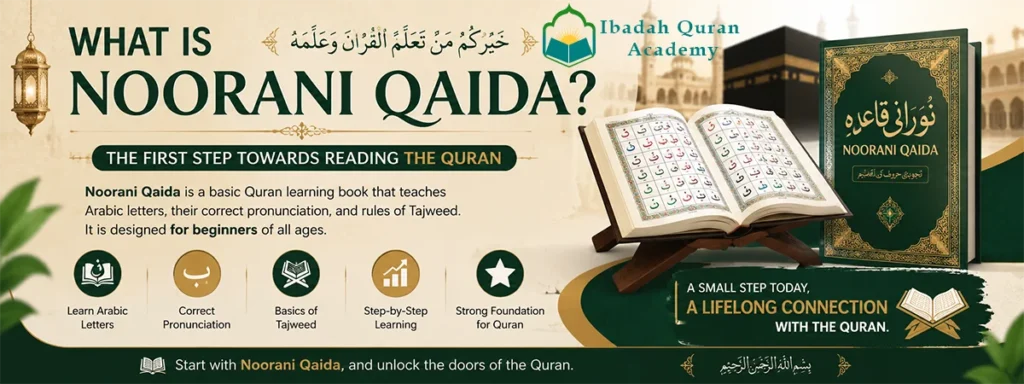
Many parents ask the same question when their child is ready to read the Quran: What is Noorani Qaida? In simple terms, it is a foundational Arabic reading book that teaches beginners how to recognise letters, sounds, and basic Tajweed rules before moving on to full Quran recitation. The Noorani Qaida meaning comes from the word “Noorani,” meaning “light,” reflecting its purpose of illuminating the path to correct Quran reading.
At Ibadah Quran Academy, we designed our curriculum around Noorani Qaida for beginners of all ages, from young children to adults who are starting their Quran journey later in life. Whether you are searching for Noorani Qaida online classes for your child or you want to learn Noorani Qaida yourself, this guide explains everything you need to know, from lesson structure to choosing the right teacher.
What is Noorani Qaida and Why Does It Matter?
Noorani Qaida is the first step in learning to read the Quran with correct pronunciation. Rather than jumping straight into Quran verses, students first master Arabic letters, harakat, and joining rules through this beginner Quran learning book. This matters because incorrect pronunciation can change the meaning of Quranic words entirely.
The course introduces basic pronunciation rules early, so learners build good habits from day one instead of correcting mistakes later. Think of it as the Quran alphabet book before the novel — without it, fluent and accurate Quran recitation becomes far harder to achieve.
What is the Purpose of Noorani Qaida in Quran Learning?
The purpose of this method is to prepare learners for accurate Quran recitation. It teaches Arabic letter shapes, sounds, and combinations in a structured, step-by-step Quran learning format. Students practice individually, then in short words, before reading connected text. This approach builds confidence and prevents pronunciation errors that often develop when beginners skip straight to Quran reading without this foundation.
What Does Noorani Qaida Actually Teach Beginners?
Noorani Qaidah teaches the 29 Arabic letters, short and long vowels, tanween, sukoon, and basic joining rules. It also introduces simple Tajweed concepts like elongation and stopping rules. By the end, students can sound out unfamiliar Arabic words accurately — a skill that carries directly into full Quran recitation.
Is Noorani Qaida Enough to Read the Quran Correctly?
Noorani Qaida is enough to begin reading the Quran, but it is not the final step. It builds the essential foundation; however, ongoing practice with a qualified teacher helps refine Tajweed and fluency. Many students continue with Quran reading for beginners lessons directly afterward to strengthen what they learned.
How Noorani Qaida Works: Lessons, Structure, and Learning Method
The course structure is intentionally simple and progressive. It typically contains around 17 lessons, moving from single letters to combined words and short sentences. Each lesson builds on the last, so learners are never overwhelmed.
For example, early lessons cover letter recognition, while later lessons focus on Tajweed rules like Madd, Ghunnah, and Qalqalah. This introductory Quran course approach means students of any age can progress at their own pace, whether they are children or adults learning alongside a Quran tutor online.
| Lesson Stage | What You Learn | Typical Duration |
|---|---|---|
| 1–3 | Arabic letters & shapes | 1–2 weeks |
| 4–6 | Harakat (vowel signs) | 1–2 weeks |
| 7–9 | Tanween & Sukoon | 1 week |
| 10–13 | Joined letters & words | 2 weeks |
| 14–17 | Basic Tajweed rules (Madd, Ghunnah) | 2–3 weeks |
Durations vary based on the learner’s age, consistency, and prior exposure to Arabic.
What Are the Lessons in Noorani Qaida? (Step-by-Step Breakdown)
The book generally includes 17 core lessons: Arabic letters, joined letters, harakat, tanween, sukoon, madd letters, and basic Tajweed rules. Each stage adds a small new skill, so learners never feel rushed. This step-by-step approach is why it has remained the standard beginner text for generations.
How Does Noorani Qaida Help with Tajweed and Pronunciation?
Noorani Qaida with Tajweed introduces pronunciation rules gradually, teaching correct articulation points for each letter. Students practice elongation, nasal sounds, and stopping rules early. This Quran pronunciation guide approach means learners develop accurate habits from the very first lesson, rather than relearning pronunciation later on.
What Comes After Noorani Qaida? (Path to Quran Reading)
After completing this stage, students typically move to Quran reading with a focus on fluency and complete Tajweed rules. Some learners also begin Hifz (memorisation) or continue with dedicated Tajweed courses. This natural progression is why Noorani Qaida Classes for kids are considered the essential starting point for lifelong Quran learning.
Who Can Learn Noorani Qaida? Kids, Adults, and Non-Arabic Speakers
Noorani Qaida for kids is common, but it isn’t only for children. Learning it as an adult is just as valuable, especially for those who never learned to read Arabic growing up. Age is not a barrier — only consistency and the right teaching method matter.
Noorani Qaida for non-Arabic speakers works particularly well because the method relies on visual letter recognition and repetition rather than prior language knowledge. Whether you are enrolling your five-year-old or joining Quran classes for ladies yourself, the same structured approach applies.
What is the Best Age to Start Noorani Qaida for Kids?
Most children can start between the ages of 4 and 6, once they can recognise shapes and sounds. However, there is no strict cutoff — older children and teens benefit equally. The key factor is readiness and a teacher who can adapt the pace to the child’s attention span.
Is Noorani Qaida Suitable for Adults and Working Women?
Yes, this method is fully suitable for adults. Quran learning for working women is increasingly common through flexible online scheduling, allowing lessons around work or family commitments. Adult learners often progress faster due to stronger focus, and many report Noorani Qaida for adults as a rewarding, judgment-free experience.
Learning Noorani Qaida for Non-Arabic Speakers: What to Expect
Non-Arabic speakers can expect a slower, more visual teaching style focused on letter shapes and repetition. A patient online Quran teacher explains each sound clearly, using transliteration support where helpful. Within a few weeks, most learners recognise letters confidently, even with zero prior Arabic exposure.
Choosing the Right Noorani Qaida Course: Online vs. Local Options
Families often compare an online Noorani Qaida course with teacher options against a local Quran madrasa. Both can work, but an online Quran academy offers flexibility, one-on-one attention, and access to a female Quran teacher for kids — which is not always available locally.
If you’re searching “Quran classes near me,” consider whether that option offers structured progress tracking and qualified instructors, not just recitation practice. Ibadah Quran Academy combines the personal feel of a Quran school for kids with the convenience of learning from home.
Online Noorani Qaida Course with a Certified Teacher vs. Local Madrasa
An online Noorani Qaida course with a certified teacher offers one-on-one attention, flexible timing, and consistent progress tracking — advantages a crowded local madrasa classroom often cannot match. However, some families prefer face-to-face interaction. The right choice depends on your child’s learning style and your household schedule.
What to Look for in a Qualified Female Quran Teacher for Kids
Look for a female Quran teacher for kids with verified Tajweed certification, teaching experience, and strong communication skills with young learners. Ask about trial classes, lesson recordings, and progress reports. A qualified teacher should explain their teaching method clearly before you commit to ongoing lessons.
Can You Learn Noorani Qaida Without a Teacher? (Self-Study vs. Guided)
Self-study using a Quran alphabet book or Noorani Qaida audio lessons is possible but risky, since pronunciation errors often go uncorrected. A guided Quran tutor online can catch mistakes immediately. For lasting accuracy, most scholars recommend learning with a teacher rather than relying solely on a YouTube course.
How to Teach and Practice Noorani Qaida for Lasting Results
Consistency matters more than speed when learning this way. Short, daily fifteen-to-twenty-minute sessions build stronger retention than long, infrequent lessons. Parents play a key role too — reviewing the previous lesson together for five minutes reinforces memory.
Islamic education for kids works best when practice feels encouraging rather than pressured. Celebrate small wins, like correctly pronouncing a new letter, to keep motivation high. This steady approach turns early Quran learning from a short course into a lasting habit of engagement.
How to Teach Noorani Qaida to Children at Home
To teach these lessons to children at home, keep sessions short, use repetition, and avoid rushing to the next lesson before the current one is solid. Pointing at letters aloud, using flashcards, and praising effort over perfection all help. Pairing home practice with a structured Quran teaching method from a tutor works best.
How to Practice Noorani Qaida Daily for Faster Progress
Daily practice, even for ten to fifteen minutes, builds far more fluency than occasional long sessions. Reviewing yesterday’s letters before starting a new lesson prevents forgetting. Recording short voice notes to track pronunciation improvement over weeks is a simple, effective habit many successful learners use.
Tracking Your Child’s Progress: Assessments and Milestones
Progress tracking should include regular teacher assessments, lesson completion records, and periodic recitation reviews. Parents should receive updates after each stage, not just at the end of the book. Clear milestones — like completing harakat or mastering Tajweed rules — help both parents and children see real, measurable progress.
Start Your Noorani Qaida Journey Today
Learning Noorani Qaida doesn’t need to feel overwhelming when you have the right guidance. At Ibadah Quran Academy, certified teachers guide every student — child or adult — through a structured, step-by-step curriculum with regular progress reports for parents.
If you’re ready to see how easy and enjoyable it can be to learn this way, a free trial class is the simplest first step. No pressure, no long-term commitment — just a chance to experience our teaching method firsthand before you decide.
Book a Free Trial Class with a Certified Noorani Qaida Teacher
A free trial class lets you meet your teacher, see the teaching style in action, and ask questions before enrolling. It’s a low-risk way to confirm the course fits your child’s pace and personality, with zero obligation to continue afterward.
Affordable Noorani Qaida Classes — Plans for Kids, Adults, and Families
Ibadah Quran Academy offers affordable Noorani Qaida classes with transparent, upfront pricing — no hidden fees. Flexible plans suit individual learners, siblings, or full families learning together, with scheduling available across the UK, USA, Canada, Australia, Pakistan, and other time zones worldwide.
How to Enroll with Confidence: What Happens After Sign-Up
After enrolling, you’ll receive a personalised schedule, a dedicated teacher, and access to progress tracking so you always know how learning is going. Most families see their child recognising letters confidently within the first few weeks of consistent lessons.
What is Noorani Qaida with meaning?
Noorani Qaida means “luminous primer” — a beginner’s book teaching Arabic letters, vowels, and basic Tajweed rules so learners can read the Quran with correct pronunciation before advancing to full recitation.
Who wrote the Noorani Qaida?
Noorani Qaida is widely attributed to Qari Muhammad Noor ul-Haq, though authorship details vary across historical sources. It has been used as a standard beginner Quran reading text for generations.
What’s the difference between Noorani Qaida and Madani Qaida?
Both teach similar fundamentals, but Madani Qaida often includes additional Tajweed detail and a slightly different lesson sequence. Noorani Qaida remains the more widely used traditional version globally.
Is Qaida Noorani only for kids?
No. While commonly used for children, it is equally effective for adults, including non-Arabic speakers starting Quran learning later in life. Age does not limit its effectiveness.
How long does it take to complete Noorani Qaida?
Most learners complete it in 3–6 months with consistent, short daily lessons. The exact timeline depends on age, prior exposure to Arabic, and lesson frequency.