
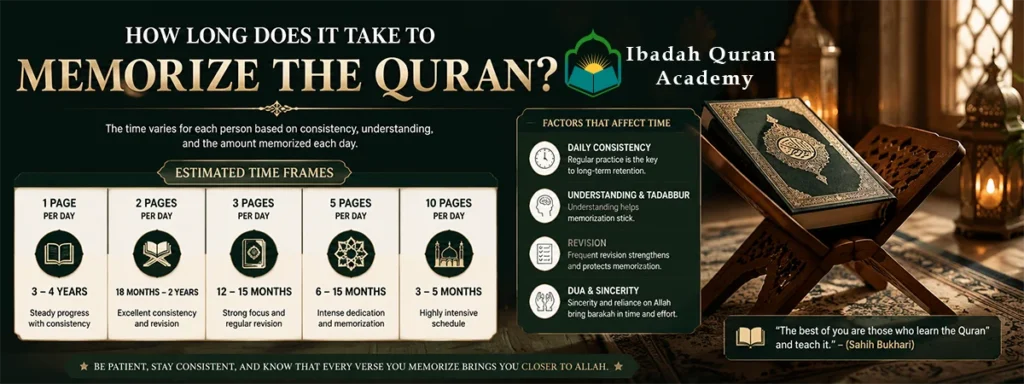
How Long Does It Take to Memorize the Quran? A Proven Timeline for Every Age and Pace
How long does it take to memorize the Quran? This is one of the most common questions parents and adult learners ask before starting their Hifz journey. The honest answer depends on age, consistency, and the quality of guidance a student receives, but most learners complete memorization somewhere between one and five years. Understanding the average time to memorize Quran helps families set realistic expectations and avoid unnecessary pressure on young hearts and minds.
Every student’s Quran memorization duration looks different, and that is completely normal. A young child with a flexible schedule may finish faster than a busy working adult, yet both can achieve the same goal with the right structure. In this guide, we break down the realistic Hifz completion time for different ages, what shapes the total time to memorize Quran, and how many years to memorize Quran it truly takes for most learners, plus how a supportive learning environment can shape the entire experience.
How Long Does It Take to Memorize the Quran on Average
How long does it take to memorize the Quran on average? Most students complete the full Quran in one to five years, depending on pace and consistency. Children enrolled in structured Hifz programs often finish in two to four years, especially when they start early and study daily. Adults, who usually balance memorization with work or family responsibilities, may need three to six years, though focused daily practice can shorten this considerably. The key factor is not natural talent, but consistency and the quality of teaching a student receives. Rather than fixating on a fixed number of months, it helps to think of Hifz as a personalized journey with milestones rather than a race against the clock.
| Daily Sabaq (New Pages) | Approx. Time to Complete the Full Quran |
| 1/4 page per day | 6-7 years |
| 1/2 page per day | 3-4 years |
| 1 page per day | About 2 years |
| 2 pages per day | About 1 year |
| 3 pages per day | 7-8 months (intensive pace) |
Full Hifz Timeline for Children vs Adults
Children typically progress faster because their schedules are flexible and their memory retention is naturally strong at a young age. A child memorizing one page daily can complete the Quran in two to three years. Adults often manage fewer hours due to work, stretching their timeline to three to six years.
Factors That Speed Up or Slow Down Memorization
Several elements affect how long it takes to memorize the Quran. Daily study hours, a student’s Tajweed foundation, teacher quality, and home environment all matter. Students who revise consistently progress faster, while irregular attendance or weak reading skills can add months or years to the process.
What a Realistic Daily Sabaq Pace Looks Like
A realistic daily sabaq, or new memorization portion, ranges from a quarter page for beginners to two or three pages for advanced students. Most certified teachers recommend starting with half a page daily and increasing gradually. This steady approach protects the student’s well-being and long-term Hifz completion time.
What Affects Your Child’s or Your Own Memorization Speed
Many parents ask how long it takes to memorize the Quran without realizing that age, prior experience, and daily habits shape the answer more than anything else. A student’s starting point, whether they already read Arabic fluently or are beginning from scratch, changes the entire timeline. Consistency in revision, known as muraja’ah, also determines whether progress sticks or fades. Rather than comparing one student’s pace to another’s, it is far more useful to focus on the specific factors within a family’s control, since these have the greatest impact on how quickly memorization actually happens.
Age and Starting Point: Kids, Teens, and Adult Learners
Younger children generally absorb new material faster, which is why many families begin Hifz between the ages of five and ten. Teenagers can progress well too, though school commitments sometimes slow their pace. Adult learners bring stronger discipline but often have less free time each day.
Prior Quran Reading and Tajweed Foundation
A student who already reads Arabic fluently with correct Tajweed memorizes faster than a complete beginner, since memorization becomes repetition rather than first learning pronunciation. For non-Arabic speakers or new Muslim converts, a few months of focused Tajweed practice before starting Hifz often saves time later.
Consistency, Muraja’ah, and Retention Habits
Daily revision, or muraja’ah, is often more important than the new memorization pace itself. Students who revise previously memorized portions daily retain material far better than those who only add new pages. Skipping revision for even a few days can require extra time to relearn forgotten sections.
How Ibadah Quran Academy Structures a Hifz Timeline for Success
At Ibadah Quran Academy, we design each student’s Hifz Classes journey around their individual pace rather than a one-size-fits-all schedule. Our certified teachers assess a student’s current reading level, then build a sabaq plan that balances steady progress with strong retention. Families receive regular updates so they always know where their child stands, and structured muraja’ah routines are built into every week to prevent forgetting. This personalized approach helps our students move through their memorization journey with confidence rather than pressure.
Certified Hifz Teachers and Personalized Sabaq Plans
Every teacher on our programme is certified in Tajweed and Hifz methodology, with experience guiding students of different ages. Sabaq plans are adjusted regularly based on real performance, not a fixed template. This flexibility means a struggling week never derails the entire timeline.
Progress Tracking and Regular Parent Feedback
We keep parents updated on how many pages, surahs, or juz their child has completed, along with notes on revision strength. This transparency helps families stay involved without monitoring every class, and it makes celebrating milestones easier, which keeps students motivated for years.
Muraja’ah Systems That Prevent Forgetting
Our structured revision cycle ensures previously memorized portions are reviewed on a rotating schedule rather than left untouched. This catches weak spots early, before they become larger gaps. Consistent muraja’ah is one of the main reasons our students retain their Hifz for life.
Is a Faster or Slower Hifz Pace Better for Long-Term Retention
When thinking about how long it takes to memorize the Quran, many families assume faster is always better, but that is not necessarily true. A rushed pace without solid Tajweed can lead to shaky recitation and forgotten material within months of completion. A slower, steady pace, on the other hand, builds a stronger foundation that lasts a lifetime. We always encourage matching the pace to the individual student’s capacity, not to other families’ timelines.
Risks of Rushing Memorization Without Solid Tajweed
Pushing a student to memorize too quickly, before their Tajweed and Arabic reading are strong, often leads to mistakes that get memorized along with the text. Correcting these later takes far more time than building a correct foundation from the start. Rushing can also cause burnout.
How Steady, Consistent Pacing Builds Lifelong Retention
A steady pace allows new material to move from short-term memory into long-term retention through spaced revision. Students who progress gradually recall their Hifz clearly years later, even without daily practice. This is why we recommend a sustainable pace over an aggressive one.
Signs Your Child Is Ready to Increase Their Daily Sabaq
A child is usually ready for a faster pace when they recite previous lessons with minimal mistakes and complete revision confidently. Strong Tajweed accuracy and consistent attendance are good indicators. If retention is struggling even at the current pace, it is better to slow down.
Common Concerns Parents Have About the Hifz Journey
Many parents worry about motivation, missed days, and what happens after Hifz is complete, and these concerns are completely valid given how long it takes to memorize the Quran for most students. A multi-year journey naturally comes with ups and downs, but a supportive structure can address each concern before it becomes a bigger obstacle. Understanding what to expect in advance helps families stay patient and consistent, even during slower weeks.
Will My Child Stay Motivated Throughout the Process
Motivation naturally fluctuates over a journey that can last several years, and this is completely normal. Celebrating small milestones, such as completing a juz, helps maintain enthusiasm. Teachers who build genuine rapport with students also make a real difference in keeping motivation steady.
How Do You Handle Gaps or Missed Days
Missed days happen due to illness, travel, or a difficult week, and they should not cause panic. A good teacher helps a student catch up gradually rather than cramming, which protects retention. Occasional gaps, handled calmly, rarely affect the overall timeline.
What Happens After Completing Hifz: Ijazah and Beyond
After completing memorization, many students pursue an Ijazah, a formal certification confirming their recitation meets traditional standards. This involves reciting the entire Quran again in front of a qualified teacher. Beyond certification, ongoing daily revision remains essential to keep the memorization strong for life.
Start Your Hifz Journey with a Free Trial Class
If you are still wondering how long it takes to memorize the Quran for your own situation, the best next step is a free trial class with us at Ibadah Quran Academy. Our certified teacher can assess your current reading level and recommend a realistic, personalized timeline based on your real strengths and available time. There is no pressure to commit, and you can experience our teaching style firsthand before enrolling in a full program.
Get a Personalized Memorization Timeline for Your Child
Every child learns differently, so a generic timeline rarely fits perfectly. Our free assessment class helps identify the current reading level, ideal daily pace, and any Tajweed gaps to address first. This gives parents a realistic, tailored expectation rather than a guess based on averages.
Meet Our Certified Quran Teachers Before You Enroll
Choosing the right teacher matters as much as choosing the right pace. Our trial class lets families see a teacher’s style, patience, and approach before committing to a full program. This helps build trust and confidence from the very first lesson.
How to Enroll with Confidence in Our Hifz Programme
Enrolling is simple: book a free trial class, meet a certified teacher, and receive a personalized Hifz plan based on the assessment. There is no long-term obligation until you feel confident in the fit. This transparent process helps you begin with confidence.
How much time to memorize the Quran?
Most students take one to five years to memorize the Quran, depending on age, daily pace, and consistency. Children with structured programs often finish in two to four years, while busy adults may need three to six years.
How much daily practice to memorize the Quran?
Beginners typically start with a quarter to half a page daily, increasing gradually. Advanced students may memorize two to three pages a day. Daily revision (muraja’ah) is just as important as new memorization.
Can I memorize the Quran in 1 year?
Yes, it is possible for a highly dedicated adult memorizing two or more pages daily with strong revision habits, though this pace is intensive and not realistic for most learners.
How long to memorize one page of the Quran?
With focused practice, most students can memorize one page in a single day, though beginners may need two to three days per page until their pace strengthens.
Does the Quran lower cortisol?
Some research suggests Quran recitation and listening may reduce stress markers like cortisol by promoting calm, rhythmic breathing and mindfulness. However, more rigorous studies are still needed to confirm this effect conclusively.